Choosing the right warehouse storage system is an important decision for any business. Ideally the product, space, storage, equipment and level of activity in the warehouse can all affect the type of system that would be appropriate.
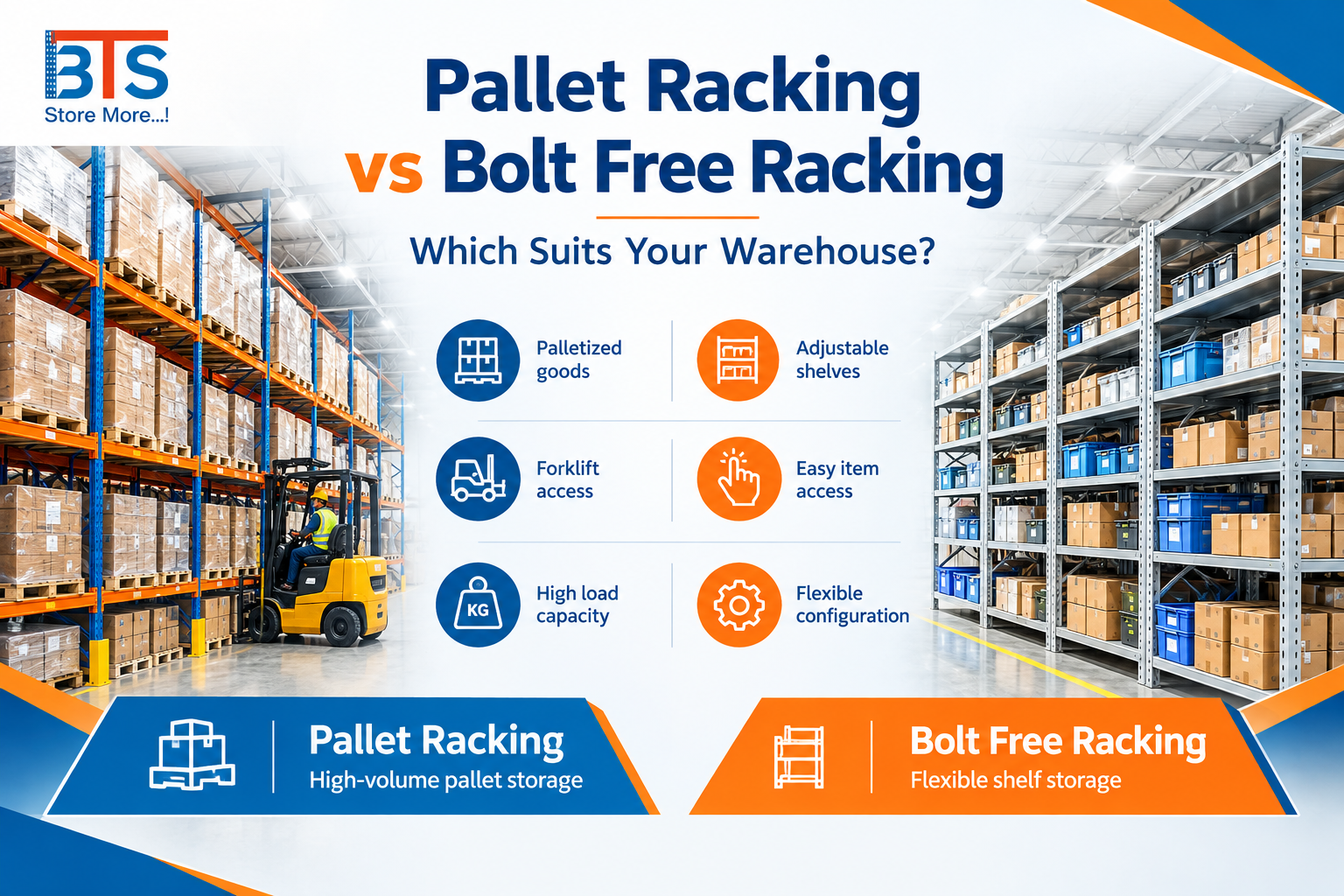
The two popular options that are considered are Pallet Racking vs Bolt Free Racking. While both systems can be utilized for organization of storage areas, they are intended to various applications and are made for different storage requirements.
Businesses can make a better decision on which system to invest in a new warehouse storage solution by understanding the differences between these two systems. Cooperation with the Best Racking and Shelving Company in UAE can also help you ensure that you choose the system that best fits the actual requirements of the warehouse.
What Is Pallet Racking?
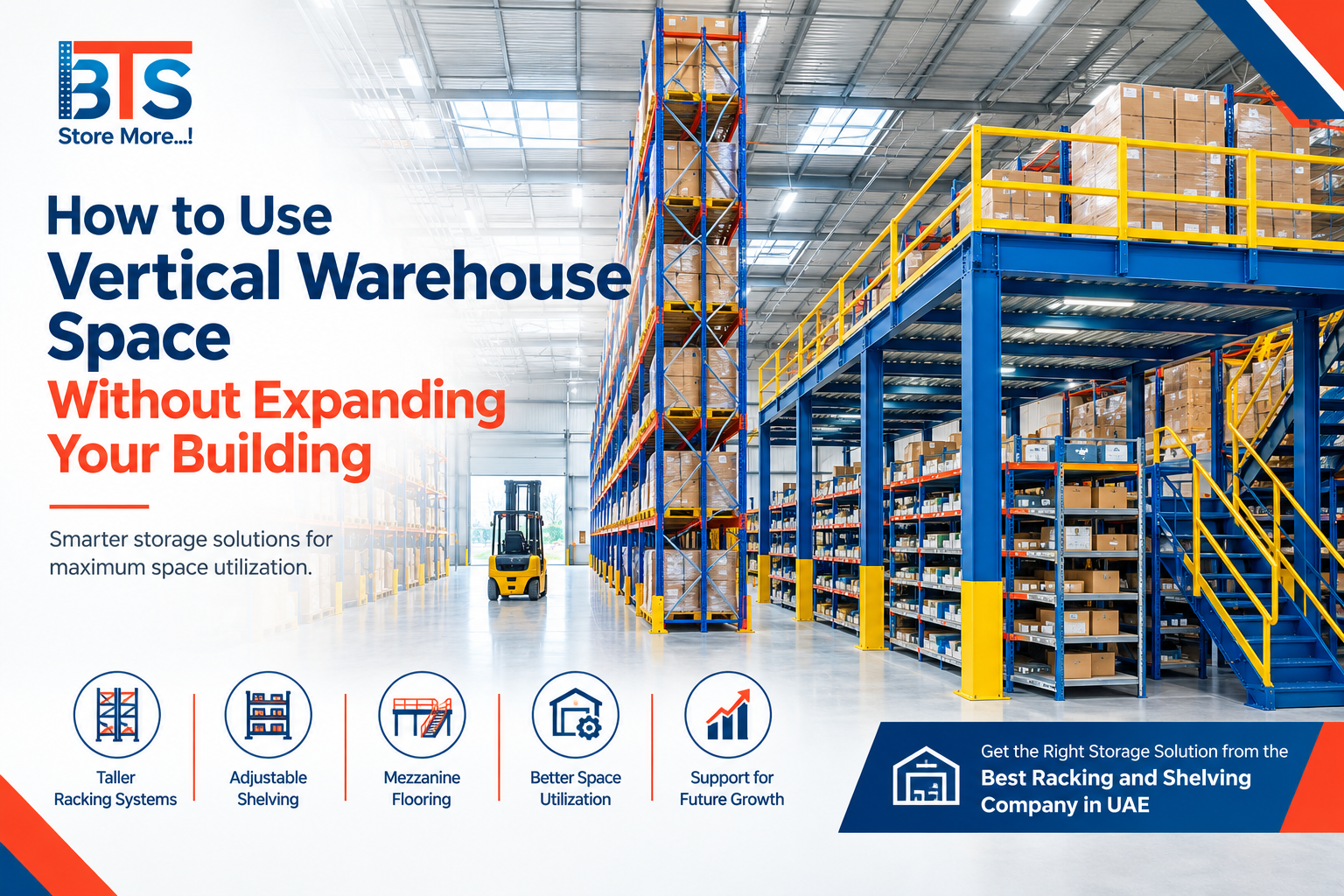
Pallet Racking is a type of industrial storage solution that is typically used to store palletized items. It is built to offer numerous tiers of storage, enabling companies to maximize their storage space in the warehouse ceiling.
With the appropriate material handling equipment, such as forklifts, products on pallets can be moved to the rack levels. This makes the system suitable for warehouses dealing with high volumes of products that need to be frequently moved around using pallets.
A configuration depends on the dimensions of the pallets, load, available warehouse height and handling equipment type.
What Is Bolt Free Racking?
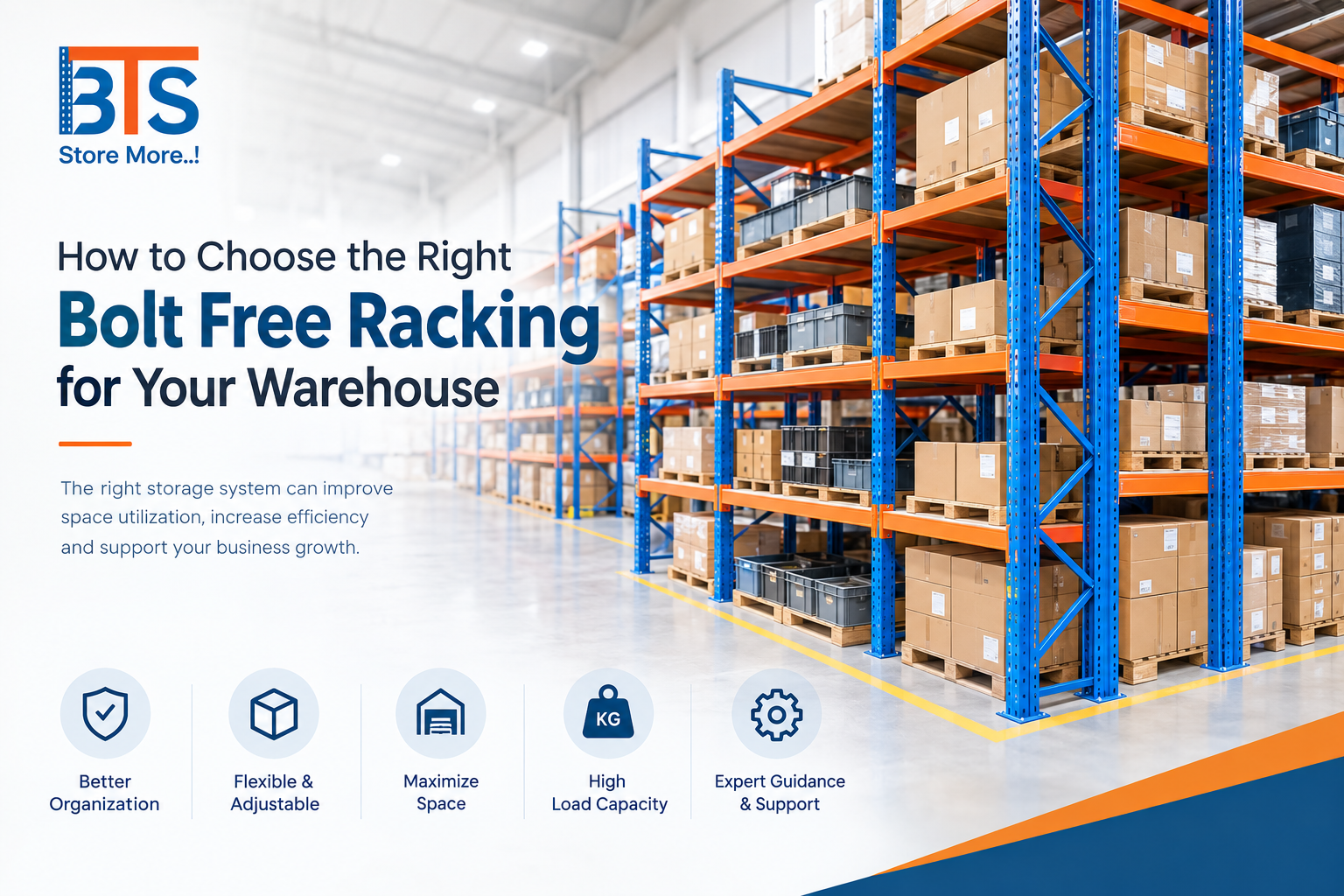
Bolt Free Racking is designed with a practical connection system that does not rely on conventional bolted connections for every shelf level. This makes it easier to assemble and adjust according to changing storage requirements.
It can be used in warehouses, workshops, stockrooms, retail backrooms, and commercial storage areas. The shelf levels can be adjusted according to the size and height of the products being stored.
This makes Bolt Free Racking particularly useful where businesses need flexible shelving arrangements rather than dedicated pallet storage.
Pallet Racking for High-Volume Storage
One of the primary benefits of Pallet Racking is its ability to hold a considerable number of palletized products.
This may be a system that is appropriate for businesses that receive and ship pallet loads of goods daily. Several levels of racks can be used for extra storage space and utilise the vertical space in the warehouse.
Pallet storage might offer a neat method for stocking inventory in warehouses that use forklifts frequently and have a great deal of items.
Bolt Free Racking for Flexible Storage
Bolt Free Racking is generally more suitable for businesses that need adjustable shelf arrangements.
Products can be stored directly on shelves, making the system useful for smaller cartons, spare parts, tools, components, and other items that may not require pallet storage.
Another useful feature is the ability to adjust shelf levels. If the size or type of inventory changes, businesses can modify the arrangement to suit their new requirements.
Comparing Space Requirements
Both systems can make better use of warehouse space, but the way they use that space is different.
Pallet Racking is generally planned around pallet dimensions, rack height, forklift access, and required aisle space. The layout needs to provide sufficient room for loading and retrieving pallets.
Bolt Free Racking, on the other hand, can be arranged around smaller products and shelf-level storage. It can be useful where employees need direct access to individual items.
The right choice depends on how products enter, move through, and leave the warehouse.
Consider the Products You Store
When looking at the Pallet Racking and Bolt Free Racking, the type of inventory is one of the initial things that you are going to want to consider.
Pallet storage might be better for businesses that primarily deal with palletized items, heavier goods, or high volumes of inventory.
Adjustable shelving might be better if the warehouse is used to store small items, spare parts, cartons, tools, or items that are accessed on a regular basis individually.
The Best Racking and Shelving Company in UAE can also conduct a professional evaluation to ensure that the storage system is suitable for the products and operations of the business.
Load Capacity Matters
Storage capacity is not only about the amount of space available. The weight of the products also needs to be considered.
Pallet Racking can be designed for specific pallet loads and storage requirements. The rack structure, beams, levels, and other components need to be selected according to the expected loads.
With Bolt Free Racking, shelf capacity also needs to match the weight of the products being stored. Businesses should avoid selecting a system based only on shelf size without considering the actual load.
Understanding these requirements before installation can help create a more suitable and reliable storage system.
Accessibility and Warehouse Operations
Product accessibility can also influence the choice between the two systems.
With Pallet Racking, forklifts or other suitable equipment may be required to place and retrieve palletized goods from higher levels. This can work well for warehouses with established pallet-handling operations.
Bolt Free Racking can provide more direct access to individual products. This can be useful for businesses where employees regularly pick smaller items manually.
The layout should therefore be planned around the actual workflow of the warehouse rather than simply focusing on storage capacity.
Which System Is More Flexible?
For changing shelf arrangements, Bolt Free Racking allows for flexibility with adjustable shelf levels.
This can be beneficial for businesses with frequently changing product sizes or quantities in stock. Shelves can be moved around as necessary for the current storage needs.
While the main focus of the Pallet Racking is on palletized storage, it can also be configured and customized in terms of the number of levels, configuration, rack height, and volume of storage.
The choice will be dependent on how often the warehouse will change its storage solution.
Professional Design and Installation
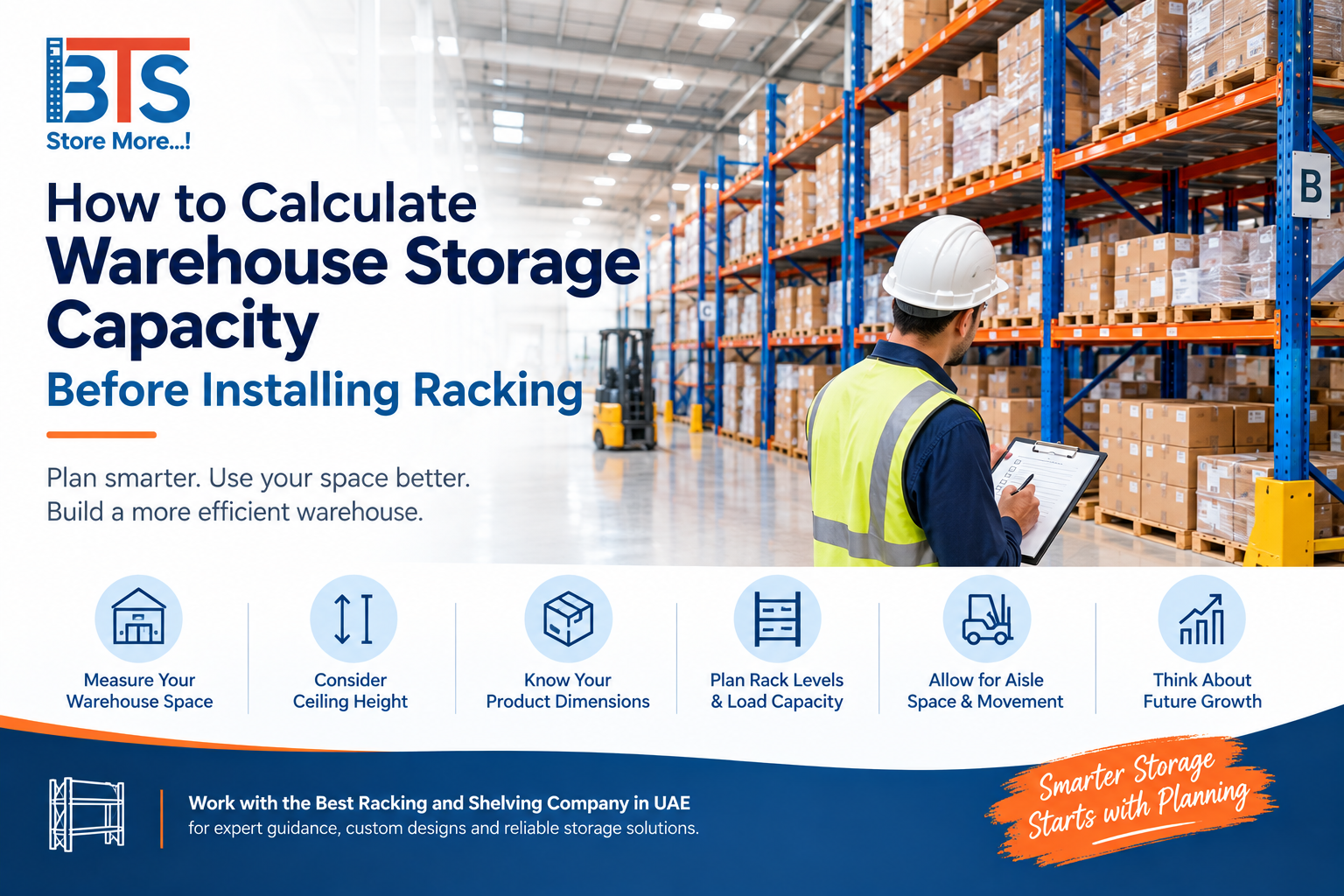
Proficient planning is crucial for either system. All of these, along with warehouse dimensions, ceiling height, aisle needs, product size, load capacity and handling equipment must be taken into account.
Professional installation also guarantees that the storage system is built and set up in the desired configuration.
If you are seeking the Best Racking and Shelving Company in UAE then it’s easier to coordinate with a company that can provide you with consultation, design, manufacturing, installation, and maintenance.
Pallet Racking or Bolt Free Racking: Which Should You Choose?
No one-size-fits-all storage solution exists for all warehouses.
Pallet Racking might be appropriate if the company has palletized goods, more stock or frequent use of forklifts.
Bolt Free Racking may be more appropriate when businesses need adjustable shelving for smaller products, spare parts, cartons, tools, or general stock.
In some cases, Bolt Free Racking might be a better choice for businesses that require adjustable shelving for smaller items, spare parts, cartons, tools, or any other general items in the stock.
How BTS Racking Can Help
BTS Racking offers various racks and shelving solutions depending on each warehouse’s needs. Services offered include consultation, custom design and engineering, manufacturing, installation, project management and maintenance.
These considerations include the space available at the warehouse, product types, loading and unloading requirements, warehouse workflow, and future storage needs, among others.
This comprehensive solution may be beneficial when businesses are considering Pallet Racking vs Bolt Free Racking, or when they are seeking a storage solution that is suitable for their actual business.
Conclusion
The decision between Pallet Racking and Bolt Free Racking begins with knowing the operations of your warehouse.
Pallet racking is based around palletized stock and can be helpful for companies with huge volumes of stock and forklift operations. Fast Facts: Bolt-free racking offers adjustable shelf configurations and can be suitable for smaller items, spare parts, cartons, tools and stock items in general.
Businesses need to think about product type, load capacity, space available, ceiling height, aisles, accessibility, handling equipment, and future storage requirements prior to making a decision.
With the collaboration of the Best Racking and Shelving Company in UAE, businesses can analyze these considerations and design their storage system that matches their warehouse.
BTS Racking offers a comprehensive range of racking and shelving solutions tailored to the specific needs of each business, backed by a team of professional consultants, designers, manufacturers, installers, project managers, and maintenance experts, to ensure efficient and effective warehouse storage solutions.