Warehouse space becomes increasingly important as a business grows. More products mean more inventory to store, more employees moving through the facility, and more pressure on the available storage area.
Without a proper storage system, even a large warehouse can quickly become crowded and difficult to manage. Products may be placed wherever space is available, aisles can become blocked, and employees may spend unnecessary time searching for inventory.
This is where professional warehouse storage solutions can make a real difference.
A properly planned warehouse racking system can help businesses improve space utilization, organize inventory, simplify product access, and create a better working environment.
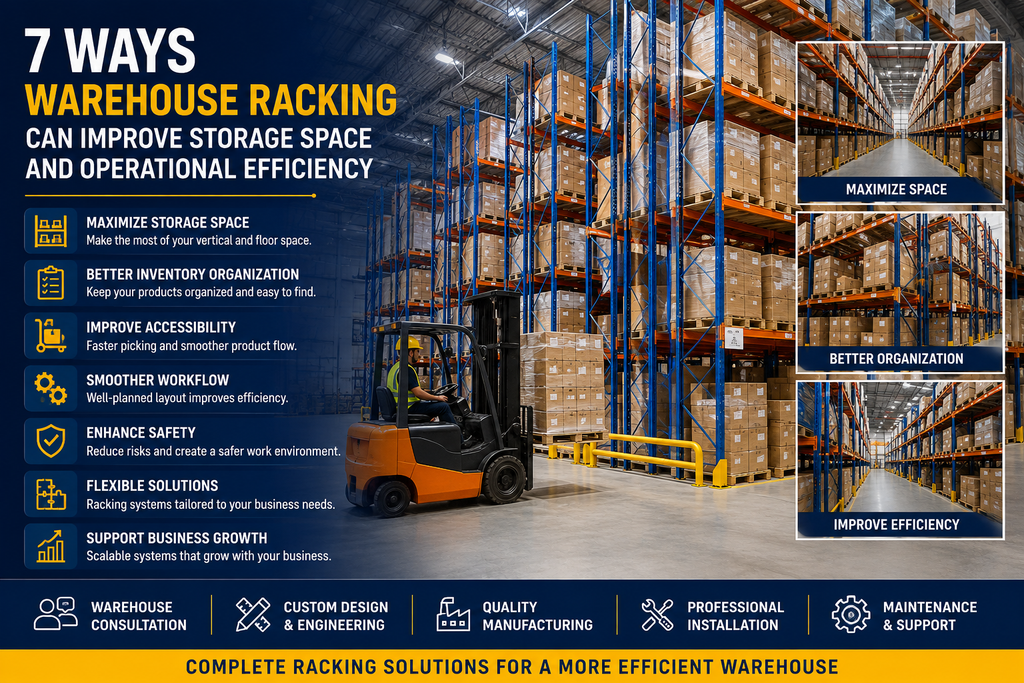
Here are seven ways the right racking system can improve warehouse operations.
1. Maximize Available Storage Space
One of the biggest advantages of warehouse racking is its ability to make better use of available space.
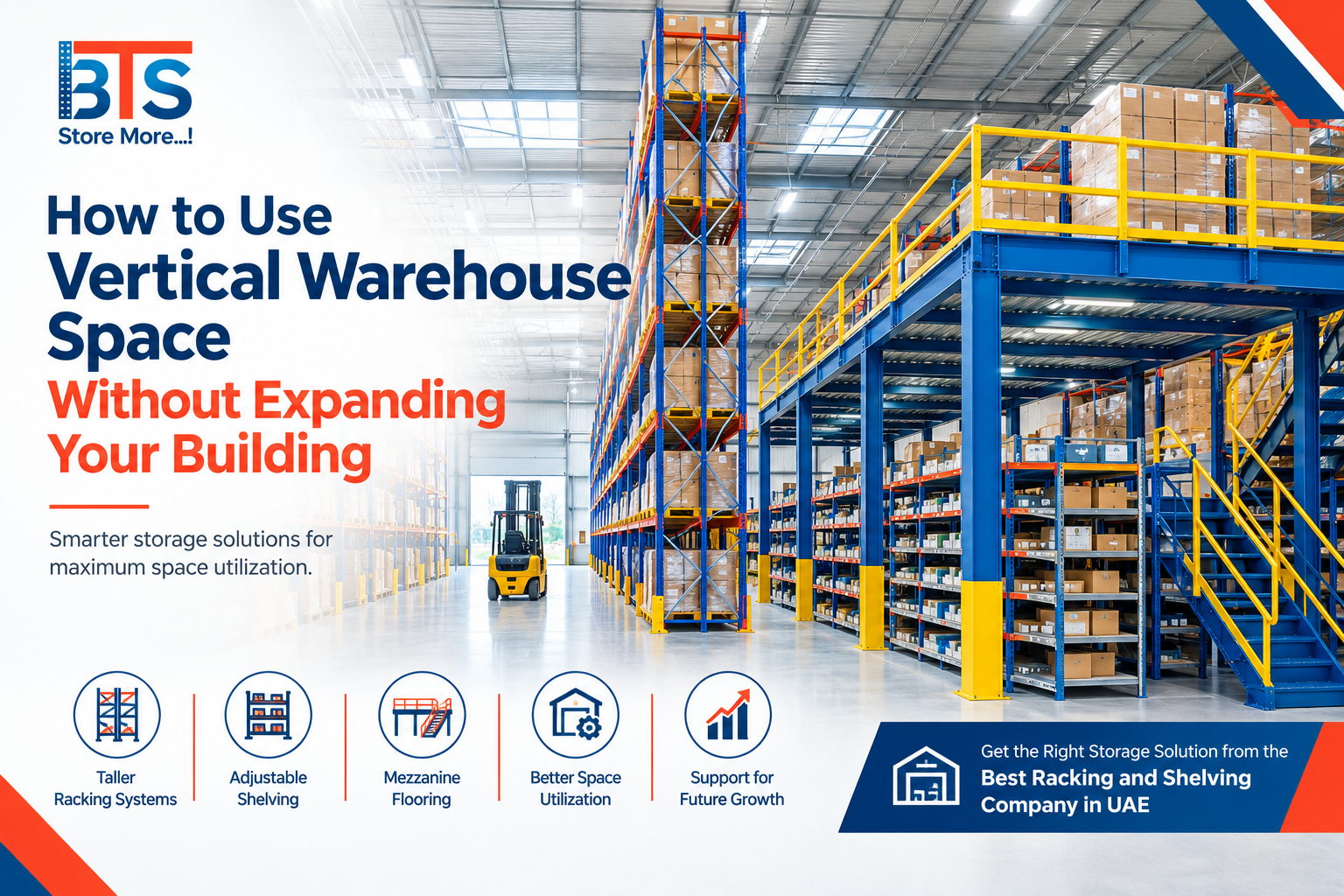
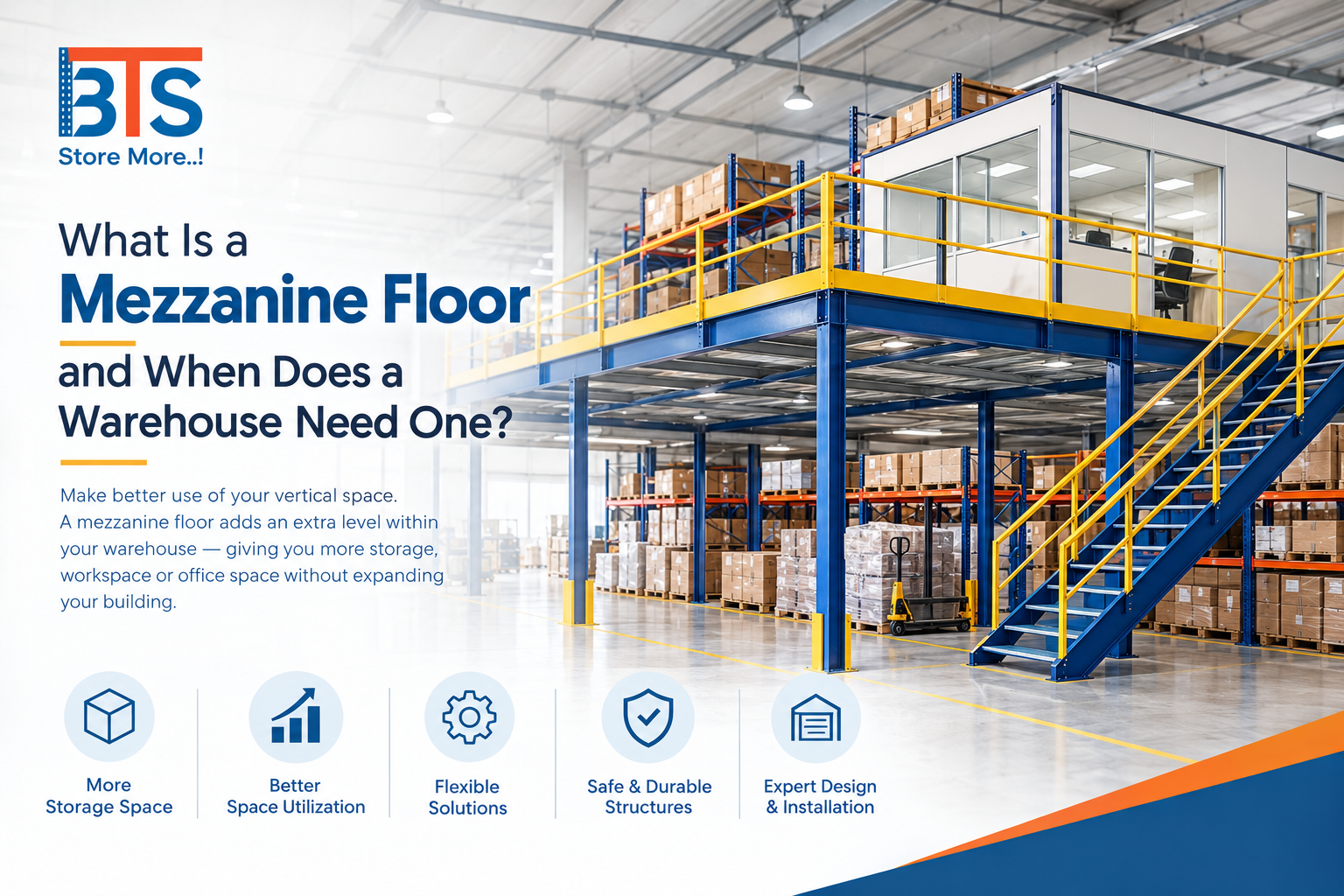
Instead of storing everything across the warehouse floor, racking systems allow products to be organized vertically. This can help businesses increase storage capacity while keeping more floor space available for movement and operations.
Effective space planning is particularly useful for businesses that are growing but are not ready to move to a larger facility.
2. Keep Inventory Better Organized
A disorganized warehouse can make even simple tasks more difficult.
When products have clearly defined storage locations, employees can identify and retrieve items more easily. Products can be arranged according to category, size, weight, demand, or frequency of use.
Commercial shelving and other storage systems can be used to create organized areas for different types of inventory.
Better organization can also make stock counting and inventory management easier.
3. Improve Product Accessibility
Storage capacity alone does not make a warehouse efficient. Employees also need easy access to the products they handle.
The right storage racking system can be planned around product movement. Frequently accessed products can be placed in suitable locations, while products that are not needed as often can be stored in other areas.
This type of planning can reduce unnecessary movement and help employees complete warehouse tasks more efficiently.
4. Create a Smoother Workflow
Warehouse efficiency depends heavily on how people, products, and equipment move through the facility.
Poorly planned storage can result in unnecessary walking, blocked pathways, difficult picking routes, and delays between different stages of warehouse operations.
Professional warehouse consultation and custom design can help businesses develop a layout that supports their actual workflow.
Storage areas, aisles, loading zones, picking areas, and other operational spaces can be considered together rather than planned separately.
5. Support a Safer Working Environment
Safety should always be considered when selecting and installing warehouse racking.
Storage systems need to be suitable for the products and loads they are expected to support. Proper installation and regular inspections are also important for maintaining the condition of the system.
Warehouse operations often involve forklifts, handling equipment, heavy products, and frequent movement. A professionally designed storage layout can help create clearer working areas and reduce unnecessary obstacles.
Regular maintenance can also help identify damaged or worn components that may require attention.
6. Select a Solution Based on Your Products
There is no universal storage system for every business.
A warehouse storing heavy pallets will have very different requirements from a facility storing smaller individual products. This is why businesses should select their racking based on product characteristics and operational needs.
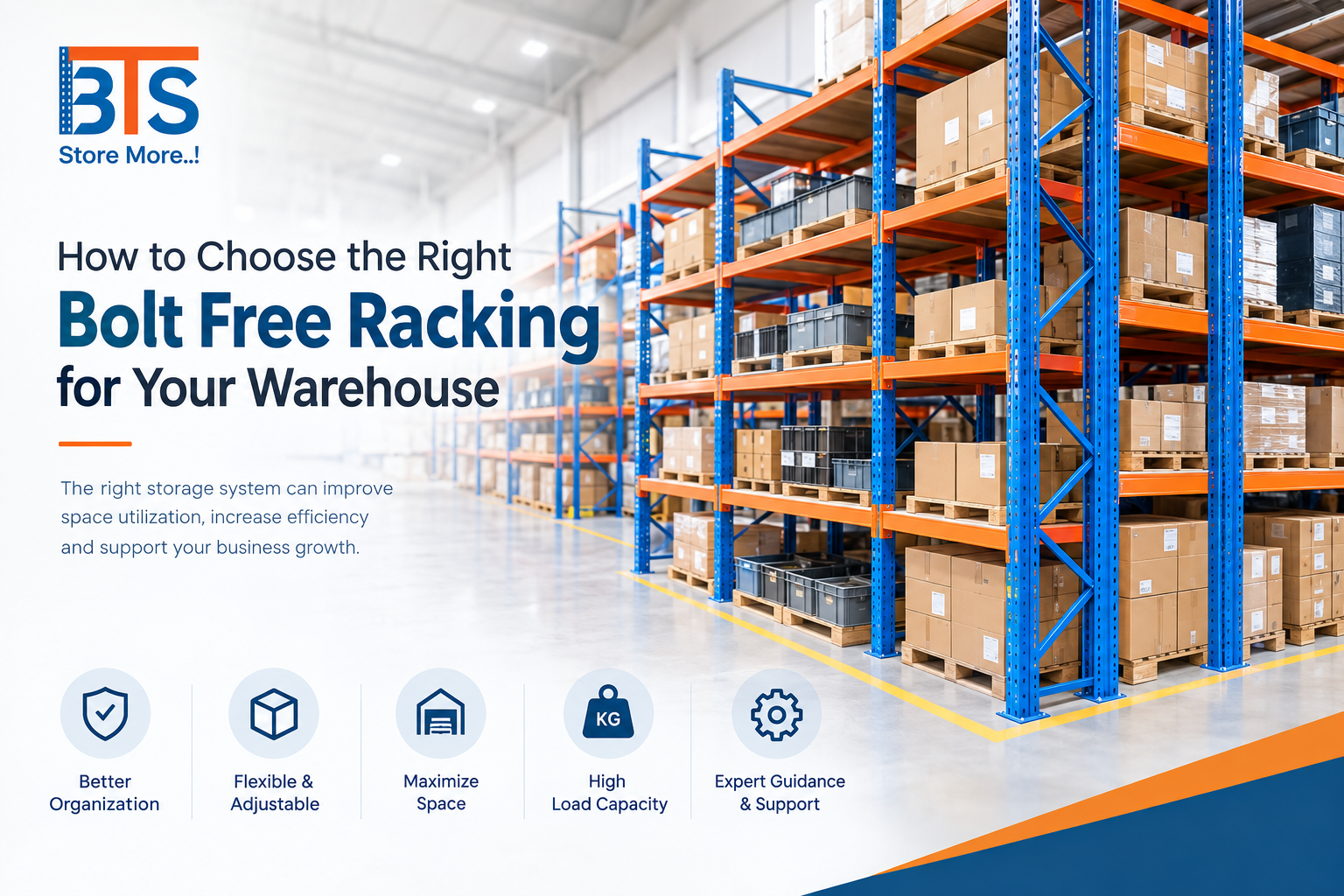
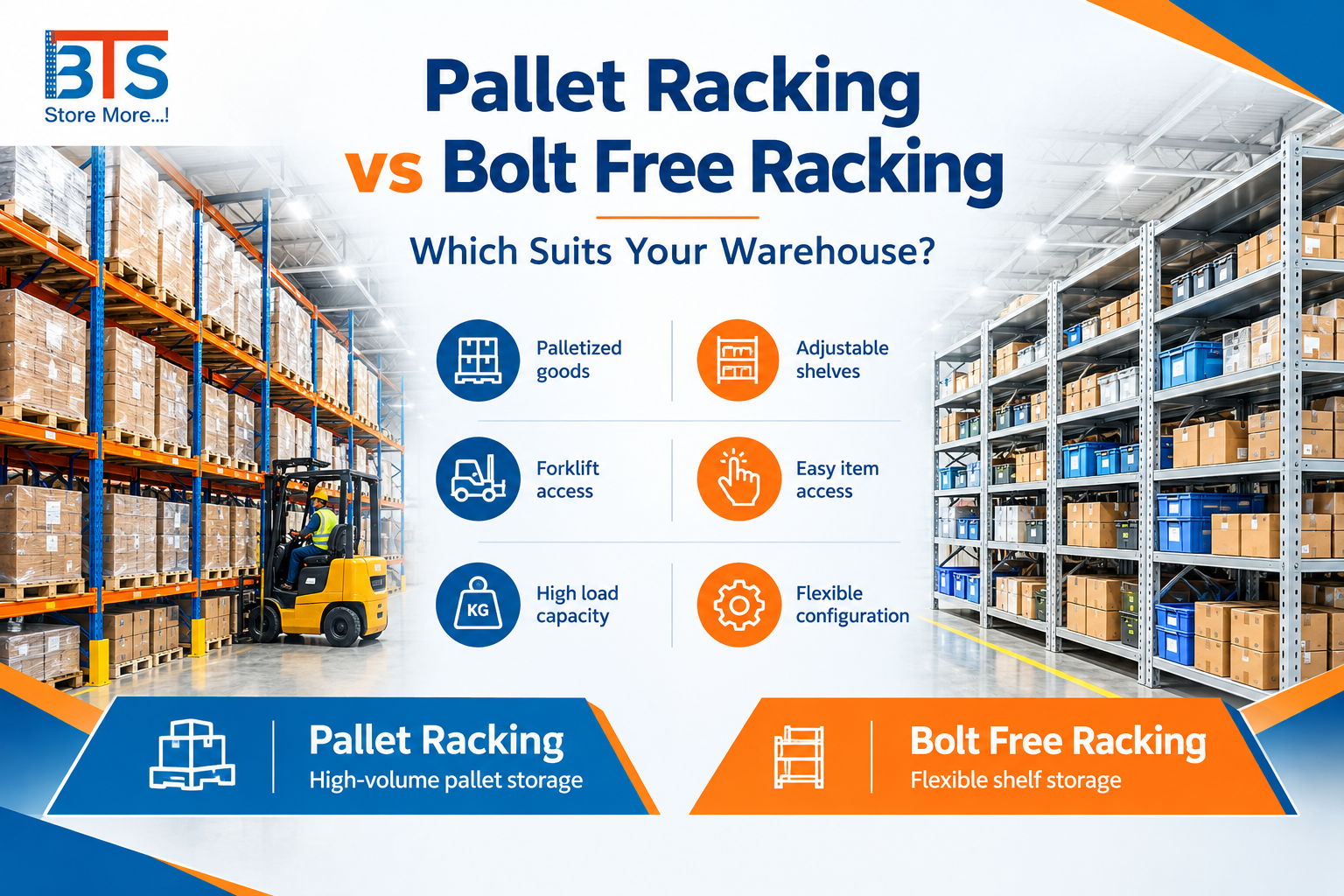
Pallet racking systems can be suitable for palletized goods, while commercial shelving and other industrial storage solutions may be better suited for smaller products.
A professional consultation can help determine which system is appropriate for the warehouse and how it should be arranged.
7. Prepare Your Warehouse for Future Growth
A good warehouse storage solution should not only solve today’s problems. It should also support future business requirements.
As inventory grows, your storage needs may change. You may need additional capacity, different shelving configurations, or changes to the warehouse layout.
Planning for future requirements during the initial design stage can provide greater flexibility and help businesses adapt without completely redesigning their storage environment.
From Consultation to Ongoing Support
Creating an efficient warehouse involves more than purchasing racks.
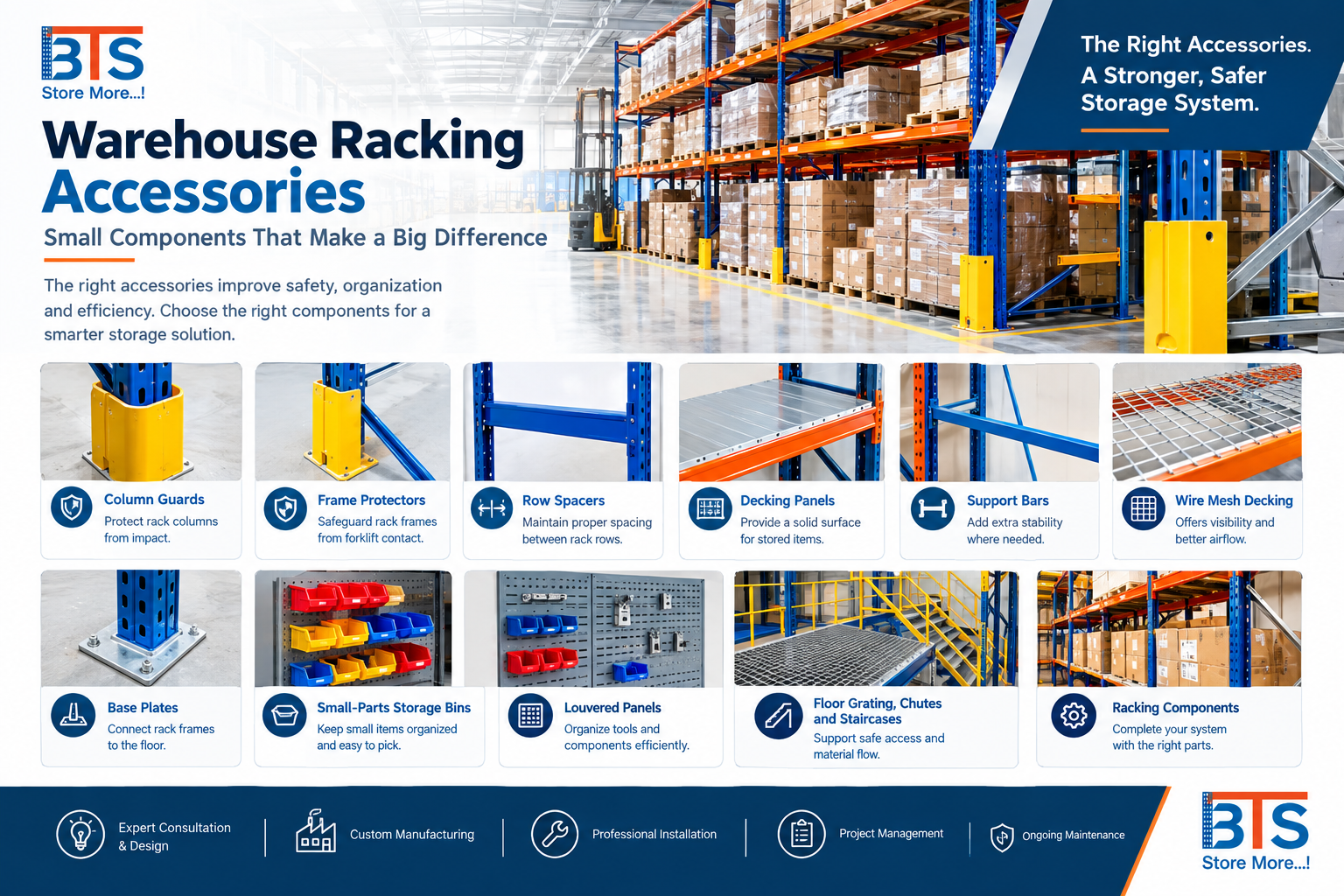
The process may include site assessment, consultation, design, engineering, manufacturing, project management, installation, and ongoing maintenance.
BTS Racking provides these services to help businesses develop customized storage solutions based on their individual requirements.
Professional consultation can help identify the right storage approach, while custom engineering ensures that the design fits the warehouse. Manufacturing and installation then bring the plan into reality, followed by maintenance and support to help keep the system performing effectively.
This complete approach can make warehouse improvement easier for businesses that want one experienced team to manage the project from start to finish.
Why Professional Warehouse Planning Matters
A warehouse may look simple from the outside, but efficient storage requires careful planning.
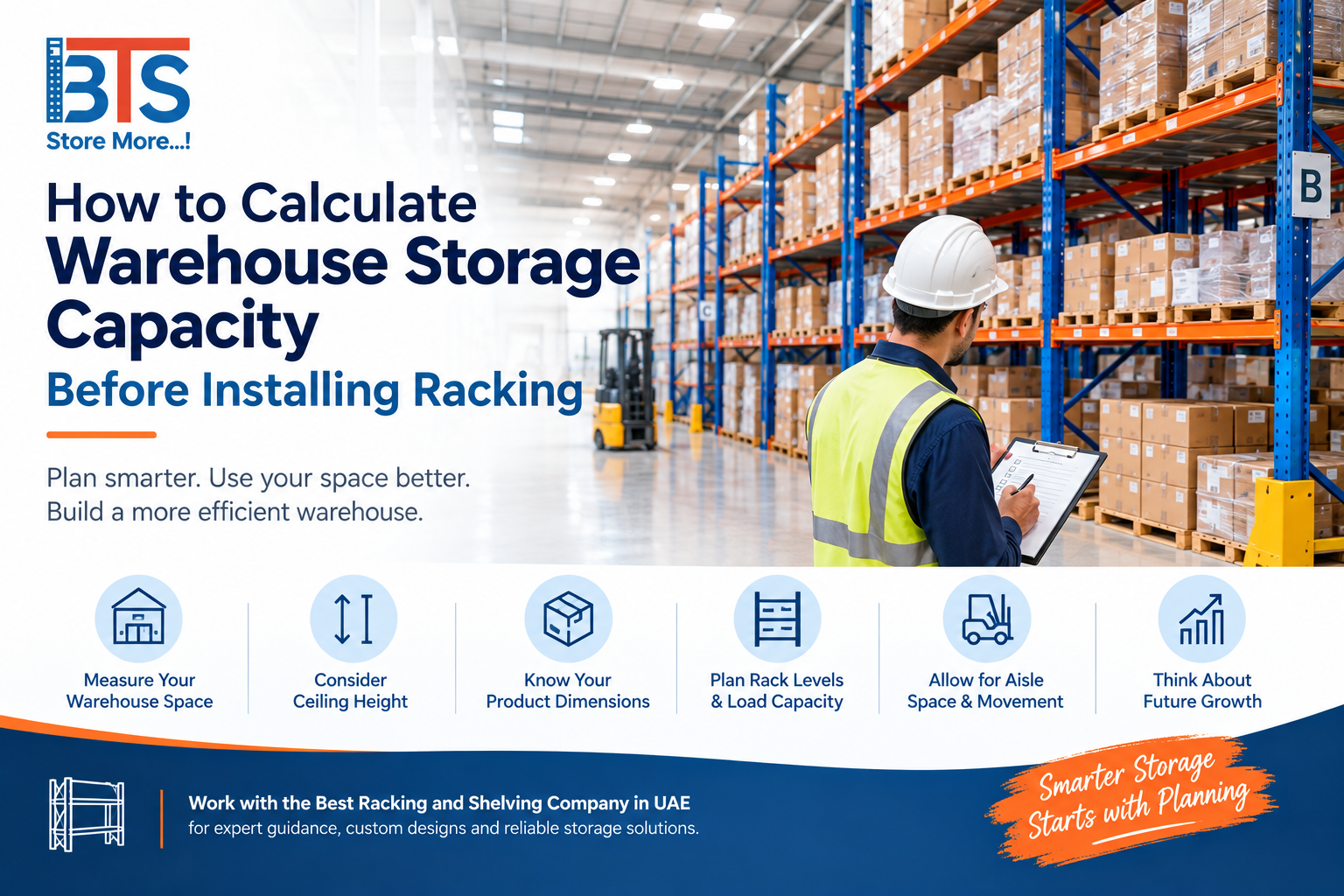
Small decisions about rack positioning, aisle space, product accessibility, and storage height can have a significant impact on daily operations.
Professional planning helps businesses look at the warehouse as a complete working environment rather than simply a place to store products.
The goal is to create a system where storage, movement, accessibility, and safety work together.
Final Thoughts
The right warehouse storage solutions can transform the way a business uses its facility. Better space utilization, improved organization, easier product access, smoother workflow, and stronger safety practices can all contribute to more efficient warehouse operations.
Whether you need pallet racking, commercial shelving, or a customized industrial storage solution, the first step is understanding what your warehouse actually needs.
With professional consultation, custom design, engineering, manufacturing, installation, project management, and ongoing maintenance, businesses can create storage systems that are designed for both current operations and future growth.
A well-planned warehouse is not just more organized. It can help your team work more efficiently and make your available space work harder for your business.